
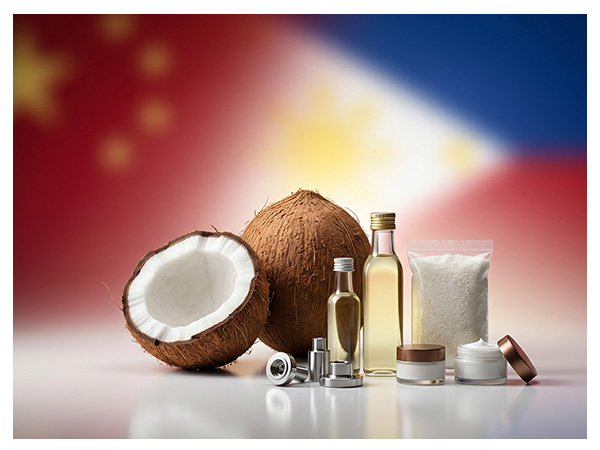
A Strategic Alignment Study:
The Philippine Coconut Industry and
Chinese Food Manufacturing
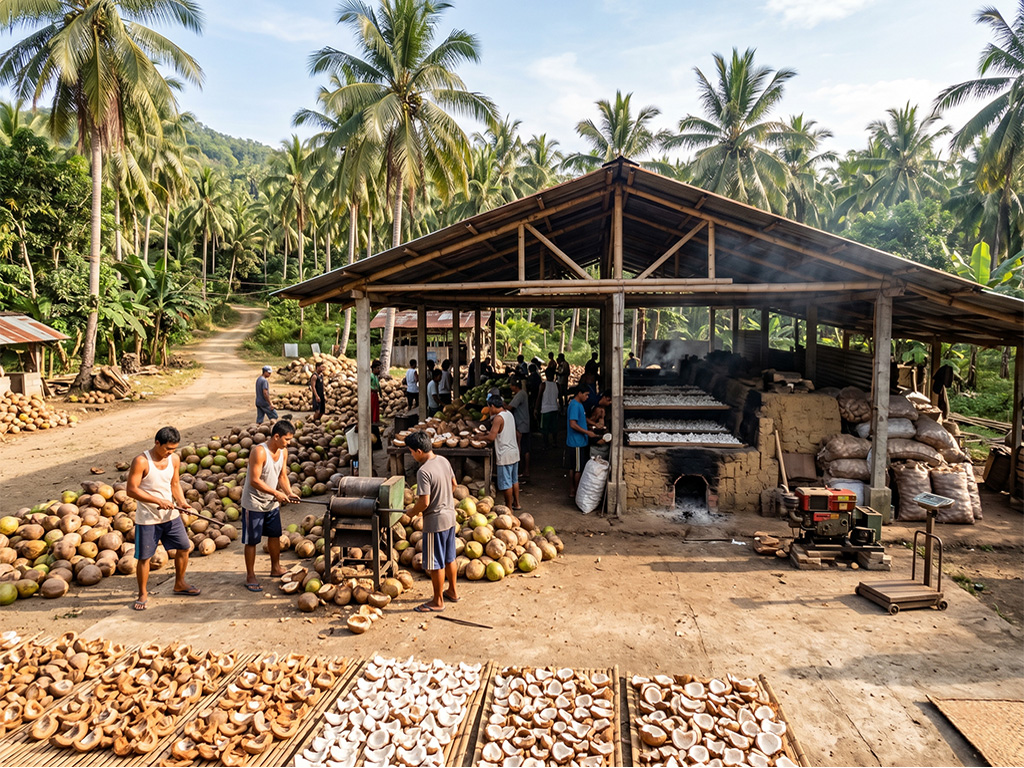
Coconut Production in the Philippines with Chinese-Made Processing Equipment
The Philippines is one of the world’s largest producers of coconuts, with the industry contributing significantly to rural employment, export revenue, and food security. Traditionally, coconut processing in the country has been labor-intensive and fragmented, limiting efficiency and scalability.
In recent years, however, producers have begun integrating Chinese-manufactured processing equipment to modernize operations and improve output quality.
Case Study: Bringing 24/7 Power to Coastal Quezon
1. The Challenge
Many remote areas in Quezon Province face geographic isolation due to mountainous terrain and coastal locations. For years, the community relied on:
- Limited grid extension from local cooperatives.
- Expensive diesel generators running only 4 hours per night.
- High costs of kerosene for lighting, posing fire hazards.
2. The Solution
Our team designed a robust Off-Grid Hybrid System tailored to the Philippine climate:
- Solar Array: 15kW high-efficiency monocrystalline panels.
- Storage: 30kWh Lithium Iron Phosphate (LiFePO4) battery bank for night-time use.
- Durability: Typhoon-resistant mounting structures capable of withstanding winds up to 250 km/h.
3. Key Metrics & Results
| Metric | Before Implementation | After Implementation |
|---|---|---|
| Power Availability | 4 Hours / Day | 24 Hours / Day |
| Energy Cost | High (Fluctuating Diesel) | Fixed (Lower Operational Cost) |
| Economic Impact | Stagnant Evening Trade | New Night-market & Cold Storage |
4. Socio-Economic Impact
Livelihood & Education
With reliable power, local fishers have established a small-scale ice production facility to preserve their catch. Furthermore, students can now use computers and study safely under LED lighting during the evening.
"The shift to solar didn't just turn on the lights; it opened our shops and improved our children's future."
— Local Community Leader, Quezon Province
Interested in Rural Electrification?
We specialize in sustainable energy for the hardest-to-reach areas in the Philippines.
Request a Consultation